


RESEARCH: New health solutions and breakthroughs
- g2case
- Jan 21
- 6 min read
Updated: Feb 24
AMHC conducts mainline research across all advances in science. AMHC has had non-profit (501(c)(3)) status as a research clinic since September of 2016. The goal of this section is to post the latest and best proven research topics with references and summary explanation. AMHC presents the following categories for review and the readers education:
MEDICAL & HEALTH, BIOLOGY, CHEMISTRY, NANOTECHNOLOGY, BELIEVE IT or NOT! and LASERS.
The upcoming areas of AI and Robotics will bring further advances, no matter how many mistakes they make.
#1: Evolution of Spinal Decompression at AMHC
The following table shows how AMHC has evolved the computerized system of highly effective spinal decompression using AccuSpina to a unique approach of DoItYourself spinal decompression with AMHC's expert protocols and supervision:

#2: Stem Cells. Most people know very little about stem cells. To bridge this gap, please review the following NIH website:
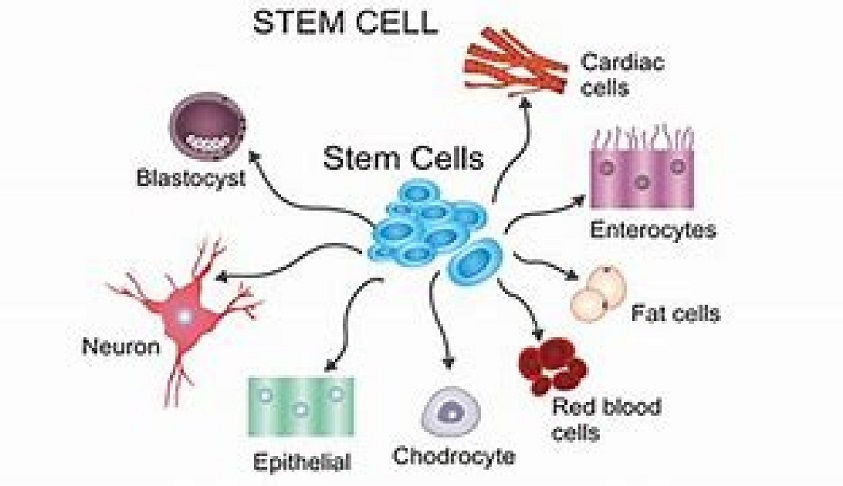
Stem cells can differentiate into many var types of human cells.
If you have heart disease, congestive heart failure or cardiomyopathy, you would well-advised to visit the following website: http://texasheart.org/research/stemcellcenter/index.cfm
For more detail on stem cell therapy, please go to AMHC's blog post on:
Dec 2024 Worlds first: Stem Cell therapy reverses Diabetes
This post also covers more about California's prestigious stem cell clinic, the UC San Diego Sanford Stem Cell Clinical Center CIRM (California Institute for Regenerative Medicine) Alpha Clinic.
#3: Genetics – Sequencing.The advent of high-throughput next generation sequencing technologies have fostered enormous potential applications of supercomputing techniques in genome sequencing, epi-genetics, metagenomics, personalized medicine, discovery of non-coding RNAs and protein-binding sites.
All of this means that the positive sides of genetic sequencing are many: Personalized medicine, Early diagnosis and prevention, Diagnosis of rare diseases, Improved understanding of genetics and their building blocks and Routine newborn screening with potential genetic corrections.
The major downside is:
Cost and access: While costs have decreased, widespread implementation, especially for whole-genome sequencing and the necessary follow-up care, have been initially prohibitively expensive. However, medical scientists are rapidly developing new gene editing techniques to dramatically bring down the costs.
#4: Chemistry
Chemistry has been the gateway to many significant discoveries.This gateway opened in 1998 the Noble prize in Physiology and Medicine went to three individuals for the discovery of Nitric Oxide as a primary “signaling molecule” in the cardiovascular system in the human body. These 3 individuals were Robert F. Furchgott, Louis J. Ignarro and Ferid Murad. Since then, tons of more research has shown that all 11 human systems are somewhat regulated by the signaling molecule, NO.
Yet another gateway, there is a synthetic peptide making news called BPC 157. It exerts beneficial effects on stroke, schizophrenia, spinal cord injury and bladder pain syndrome (Perovic et al., 2019; Vukojevic et al., 2020; Zemba Cilic et al., 2021). Researchers have consistently demonstrated that BPC 157 exerts a myriad of beneficial effects throughout the body. This mechanism of BPC 157 (i.e., BPC 157/dopamine/glutamate/NO system) is an alternative that acts within the gut-brain axis, regardless of whether this action is direct or indirect. Dr Gil personally thanks Dove Ernst (member of the AMHC Board) for finding this research gem.
Science Daily (Jan. 5, 2012) Oxytocin, the “love hormone” that builds mother-baby bonds and may help us feel more connected toward one another, can also make surly monkeys treat each other a little more kindly. Administering the hormone nasally through a kid-sized nebulizer, like a gas mask, a Duke University research team has shown that it can make rhesus macaques pay more attention to each other and make choices that give another monkey a squirt of fruit juice, even when they don’t get one themselves.
#5: Batteries
They power our phones, our computers, even our cars. But batteries have one big downside, they die! And usually way to soon and at the worst possible time. Chemist Amy Prieto and her colleagues at Colorado State University are working to change that. A high surface area means it will charge faster. The battery is made up of three main parts: an anode-made of tiny copper nanowires, a cathode-made from a rubber-like material, and an electrolyte-made of plastic that separates the anode from the cathode. Nanowires increase the battery’s performance and are so small that 25 million of them can fit on the surface of a penny. “So, they’re really tiny, that surface area is about 10,000-times higher (than hi-tech batteries in 2021), so that’s where you get this (great) power from", Prieto explained.
#6: NanoWires
Ultra-miniature wires just one atom tall have been created by inserting a string of phosphorus atoms in a silicon crystal by a team of researchers from the University of New South Wales, Melbourne University and Purdue University.
The wires are 20 times smaller than the smallest wires currently available. They measure just four atoms wide by one phosphorus atom tall. Purdue University lead researchers are: Sunhee Lee, Hoon Ryu and Gerhard Klimeck.And for physicists, the results show that Ohm’s Law, which demonstrates the relationship between electrical current, resistance and voltage, continues to apply all the way down to an atomic-scale wire level.
#7: The Green Flash
The Green Flash is a natural light phenomenon that happens at sunrise or sunset. If you have not ever seen one, it’s because it is faint and only happens for 1-2 seconds. In the photo, one is caught behind the Golden Gate Bridge in San Francisco and that magic moment in time is unforgettable. There are beach restaurants around the world called “The Green Flash” to make people aware of this natural wonder. Why so? The thickness of the Earth's atmosphere at sunset causes a prism effect for all colors and the thickness of the green part is thin compared to the other colors.

#8: Dogs are Right and Left Handed
According to the largest-ever study of canine handedness, most dogs are right-handed. Male dogs are more likely to be right-handed than female dogs, and younger dogs are more likely to be left-handed than older dogs. Dogs really do have a preferred paw or limb, otherwise known as lateralisation. Our canine companions show a more even distribution between rightys and leftys. ALSO: Dogs see Color, but not reds.

#9: Ultra Sound to erase Essential Tremors
AMHC continually looks at the expanding AI based Internet and the research sites of Pubmed.gov & ClinicalTrials.gov (sponsored by the National Institute of Health) to find new treatments of common illnesses. Tim (55 yo male) came to AMHC with having problems with hives, but also had Essential Tremors all of his life Upon deep investigation, AMHC found that Scripps in San Diego offers a new therapy: A non-invasive, one-hour Ultra Sound treatment on the brain to eliminate essential tremors. Dr Gil directed Tim to the right doctor, and Tim followed thru. Now Tim no longer has essential tremors, nor hives. AMHC's cost to Tim was zero dollars.
#10: Phantom Pain
Phantom pain is defined as the sensation of pain originating from a limb or extremity that is no longer part of the body, often experienced after amputation. It is a real physical sensation that can manifest in various forms, such as burning, cramping, or shooting sensations, and is not merely psychological. This phenomenon occurs due to changes in the brain's sensory representation of the missing limb, leading to the perception of pain even in its absence.
- for solutions -- The mirror box technique >> see the Webinar section by Dr. Gil
"Secrets of Mind & Body"
#11: Laser
A laser is a device that emits light through a process of “Light Amplification by Stimulated Emission of Radiation”. Lasers have both medical & commercial purposes.
There are 5 main categories of lasers:
Class . Strength . Focus .Year Began
Class I/II < mW Printers/pointers1980s
Class IIIA 1–5 mW Telescopes . 1990s
Class IIIB 5–500mW Med Grade1970s
Class IVa 10–10,000W Industrial1950s
Class IVb 0.5–10W Ext Med 2000s
Class IIIB laser equipment is used for Low Level Laser Therapy (LLLT), also named Photobiomodulation Therapy.
AMHC recognizes the immense healing technology available through Medical Lasers in the health sector. Hand held laser devices are made with one or more laser diodes and are usually powered by 3 or 5 volts and one laser diode is less than 1 inch in length. Each laser diode has a power of 5mW up to 500 mW for Class 3B (table above).
THOR LASER and AMI (sister company of AMHC) have the best medical grade hand held laser units in the medical field. However, the major deciding factor in delivering best results as a professional laser practitioner is the dosage.
Dosage is a combination of power and time. And that dosage must be directed accurately to the exact place of concern or injury. AMHC has developed a proprietary protocol for this exactness of dosage and accuracy.
WALT (World Association of Photobiomodulation Therapy) publishes DOSAGE tables for wavelengths of class 3B #1: 780-860nm GaAlAs lasers and #2: 904nm GaAs lasers. These are Near-infrared medical grade lasers for different human body parts. Higher wavelengths in the far infrared area are controversial for their medical benefits.
See the AMHC SERVICES section for a PBM summary. And see Blog Posts for detail, under: Unlocking Health: The Power of Photobiomodulation (PBM).


Comments